Malaysia, known for its vibrant cultural mosaic, offers an enriching experience through its local traditions and customs. This Southeast Asian country, with its blend of Malay, Chinese, Indian, and indigenous influences, provides a unique perspective on cultural integration and celebration.
Festivals and Celebrations
Festivals are the heartbeat of Malaysian culture, each with its distinct flavors and customs. Hari Raya Aidilfitri, marking the end of Ramadan, is a time for forgiveness and feasting. Malaysians host 'rumah terbuka' or open houses, inviting friends and family to join in a culinary celebration that includes dishes like ketupat and rendang.
.png)
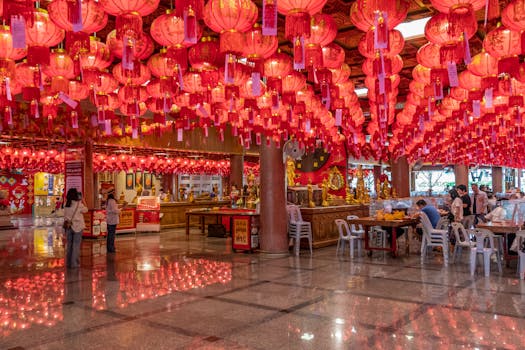
Chinese New Year brings another level of festivity, with streets adorned with red lanterns and the air resonating with the beats of lion dances. This festival focuses on family unity and honoring ancestors, culminating in the reunion dinner which symbolizes prosperity and cohesion.
Deepavali, celebrated by the Indian community, illuminates the country with its vibrant oil lamps and colorful rangolis. This festival, symbolizing the triumph of light over darkness, includes rituals and the sharing of sweets such as murukku and ladoo, enhancing the communal spirit.
Arts and Crafts
The Malaysian craft scene is vividly represented by Batik, with its intricate designs that reflect the nation's lush landscapes. States like Kelantan and Terengganu are particularly noted for their batik craftsmanship. This art not only epitomizes Malaysia's rich artistic traditions but also its deep connection to nature.
Music and Dance
Music and dance are integral to the cultural expression in Malaysia. Traditional Malay music, featuring instruments like the gamelan and angklung, sets the stage for various cultural dances. The Zapin dance, influenced by Arab traders, and the Indian Bharatanatyam, alongside the Chinese Lion Dance, showcase the diversity and fusion of cultural influences in Malaysian society.
Culinary Delights
Malaysian cuisine is a flavorful testament to its cultural diversity. Nasi lemak, the national dish, encapsulates this diversity with its ingredients that combine to create a harmonious flavor. The impact of Indian and Chinese culinary traditions is also evident in popular dishes like roti canai and char kuey teow.
Cultural Integration and Identity
The essence of Malaysian culture lies in its ability to celebrate and integrate diverse traditions. Each festival, dance, and dish tells a story of historical migrations and shared values, fostering a sense of unity and pride among Malaysians. This cultural tapestry not only attracts global tourists but also strengthens communal bonds within the country.
Conclusion
Malaysia’s traditions are more than just celebrations; they are a vibrant portrayal of the nation's history and societal values. Exploring these traditions offers insights into the harmonious coexistence of different cultures and the adaptability of these traditions over centuries. Whether through participating in a festive celebration, savoring a traditional meal, or engaging in a cultural dance, Malaysia offers a profound experience that resonates with both locals and visitors, providing a deeper understanding of its rich cultural landscape.