Exploring the Majesty of Italian Art: From the Renaissance to the Modern Era
Italian art offers a panoramic view of Europe's cultural history, presenting a tapestry rich with innovation, emotion, and beauty. From the groundbreaking techniques of the Renaissance to the provocative shifts of modern art, Italy's artistic legacy is both profound and influential. This guide delves into the evolution of Italian art, spotlighting major periods and seminal artists who have defined its enduring legacy.
The Renaissance: A New Dawn in Artistic Expression
.png)
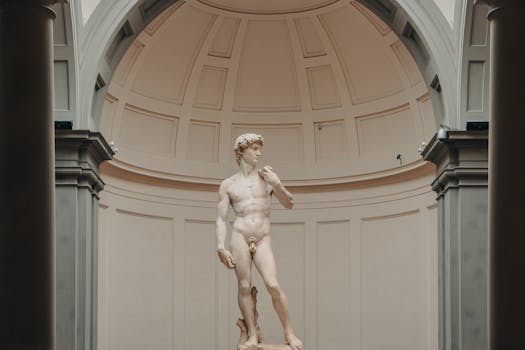
Originating in the late 14th century, the Italian Renaissance was a celebration of human potential and classical forms. Artists like Leonardo da Vinci, Michelangelo, and Sandro Botticelli brought forth works that not only defined the era but also the very essence of humanist ideals. Leonardo's "Mona Lisa" with her enigmatic smile and Michelangelo's monumental Sistine Chapel ceiling are paragons of this era, emphasizing an anatomical precision and a deep humanistic approach that were revolutionary at the time.
Baroque: Emotion and Drama
The Baroque period followed, introducing a powerful, dynamic approach to art. Artists such as Caravaggio and Gian Lorenzo Bernini created works that were intensely emotional and dramatically realistic. Caravaggio’s dramatic use of chiaroscuro and realistic depictions of human figures made his paintings resonate with a raw emotional power. Meanwhile, Bernini’s sculptures and architectural designs, like the awe-inspiring Ecstasy of Saint Teresa, pushed the boundaries of spatial composition and detailed expression.
The Rococo and Neoclassicism: Elegance and Classical Revival
During the 18th century, the Rococo style emerged, characterized by its playful and decorative artistry, as seen in the works of Giovanni Battista Tiepolo and Canaletto. Tiepolo's frescoes with their light, ethereal quality decorated the grand palaces of Europe, while Canaletto’s detailed vistas of Venice captured the charm and elegance of the city.
As a response to Rococo's ornateness, Neoclassicism arose in the late 18th century, drawing inspiration from the unblemished ideals of classical antiquity. Sculptor Antonio Canova, with works like Psyche Revived by Cupid's Kiss, epitomized the smooth lines and idealized forms of Neoclassicism.
Romanticism and Modernism: Emotion and Innovation
Moving into the 19th century, Romanticism took center stage with artists like Francesco Hayez, who portrayed intense emotion and complex psychological themes. His works, such as The Kiss, are celebrated for their passionate and evocative imagery.
The 20th century heralded the arrival of Modernism, where Italian art once again broke new ground with the Futurist movement. Embracing the era’s dynamism, artists like Umberto Boccioni and Giacomo Balla experimented with ideas of motion and technology, as evident in Boccioni’s Unique Forms of Continuity in Space.
Arte Povera: Challenging Materialism
Mid-20th century Italy saw the rise of Arte Povera, a movement that stood against the commercialization of art by incorporating everyday materials into artworks. Artists such as Michelangelo Pistoletto and Giovanni Anselmo utilized items like rags and twigs, returning to a focus on process and fundamental human experiences.
Contemporary Italian Art: A Continuum of Innovation
Today, Italian art remains vibrant, with contemporary artists exploring an array of mediums and themes, continuing a tradition of challenging the status quo and pushing creative boundaries.
Conclusion
The journey through Italian art is as rich and varied as the history of Italy itself. From the anatomical precision of Renaissance masters to the emotional brushstrokes of Romantic painters and the bold abstractions of modernists, Italian art has continually evolved, reflecting broader changes in society, culture, and philosophy. For enthusiasts and scholars alike, Italian art offers a unique window into the enduring power and beauty of human creativity, making it a perennial area of study and appreciation.