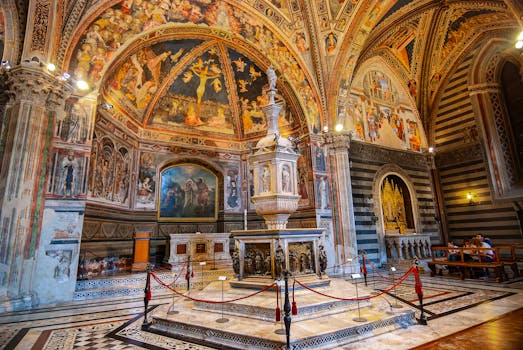
Italy’s artistic heritage is one of the richest and most influential in the world, spanning centuries and leaving an indelible mark on Western civilization. From the grandeur of the Renaissance to the bold experimentation of modern art, Italian artists have shaped how we think about beauty, perspective, and creativity. This guide will take you through the defining movements and iconic figures of Italian art, tracing their evolution and impact on the global stage.
The Dawn of Italian Renaissance: A Revolution in Art
The Renaissance, which originated in Italy in the 14th century, marked a profound transformation in the realm of art. Cities like Florence, Venice, and Rome became vibrant centers of cultural and intellectual activity, nurturing talents whose names are synonymous with artistic genius.
During the early Renaissance, artists like Giotto di Bondone (1267–1337) began to break away from the rigid conventions of medieval art. Giotto’s frescoes, particularly those in the Scrovegni Chapel in Padua, introduced a new naturalism and sense of human emotion, laying the groundwork for future innovations.
.png)
The High Renaissance, spanning roughly from 1490 to 1530, saw the emergence of Leonardo da Vinci, Michelangelo Buonarroti, and Raphael Sanzio. Leonardo’s "Mona Lisa" and "The Last Supper" are among the most studied and celebrated works in art history, showcasing his mastery of sfumato (the delicate blending of colors and tones) and anatomical precision. Michelangelo’s frescoes in the Sistine Chapel and his sculptural masterpiece "David" set new standards in depicting the human form, while Raphael’s harmonious compositions in works like "The School of Athens" epitomize Renaissance ideals of balance and beauty.
According to the Uffizi Gallery in Florence, more than 2 million visitors each year come to experience firsthand the masterpieces of this era, demonstrating the enduring allure of Renaissance art.
Baroque Brilliance: Drama and Emotion Unleashed
By the late 16th and 17th centuries, Italian art underwent another dramatic transformation with the advent of the Baroque period. Artists of this era sought to captivate viewers with theatricality, movement, and intense contrasts of light and shadow—a style known as chiaroscuro.
Caravaggio (1571–1610) stands as a towering figure of the Italian Baroque. His works, such as "The Calling of Saint Matthew," revolutionized painting by depicting sacred scenes with raw realism and ordinary people as models. Caravaggio’s influence spread rapidly, inspiring a generation of artists known as Caravaggisti.
Another major Baroque artist, Gian Lorenzo Bernini (1598–1680), left an indelible mark on Rome’s urban landscape. Bernini’s sculptures, including "The Ecstasy of Saint Teresa" at the Cornaro Chapel and the grand "Fountain of the Four Rivers" in Piazza Navona, are renowned for their dynamic movement and emotional intensity.
Baroque art was not just confined to painting and sculpture; it transformed architecture as well. The opulent interiors of Rome’s churches, such as the Church of Sant’Ignazio, glitter with gold leaf, frescoes, and elaborate ornamentation.
Neoclassicism and Romanticism: Revisiting the Past, Embracing Emotion
By the late 18th century, tastes shifted again in response to the Enlightenment and the rediscovery of ancient Roman and Greek art. Neoclassicism emerged as an artistic movement that championed clarity, order, and restraint, often inspired by archaeological findings in Pompeii and Herculaneum.
Antonio Canova (1757–1822) became the leading sculptor of Neoclassicism, creating marble statues such as "Psyche Revived by Cupid’s Kiss" that blend idealized beauty with technical mastery. His works graced the courts of Europe and helped set the aesthetic standards of the age.
Parallel to Neoclassicism, Romanticism flourished in the early 19th century. Italian artists like Francesco Hayez captured the spirit of national awakening and personal emotion. Hayez’s "The Kiss" (1859) became a symbol of Italian unification, expressing love and patriotism with vivid color and dramatic composition.
These movements reflect the way Italian art continually dialogues with its history, reinventing classical forms to address contemporary concerns.
Modern Italian Art: Innovation and Experimentation
The turn of the 20th century saw Italy become a hotbed of avant-garde experimentation, as artists responded to rapid social and technological change. The Futurist movement, founded in 1909 by Filippo Tommaso Marinetti, sought to capture the dynamism of modern life—speed, machinery, and urban energy.
Umberto Boccioni, a leading Futurist painter and sculptor, created works like "Unique Forms of Continuity in Space" (1913), which evoke movement and vitality. The Futurists rejected traditional art forms, advocating instead for bold colors, fractured perspectives, and a celebration of the new.
After the devastation of World War II, Italian artists contributed significantly to the international art scene. Lucio Fontana, known for his "Spatial Concepts" series, slashed canvases to explore the relationship between space, matter, and light. The Arte Povera movement of the late 1960s, led by artists like Alighiero Boetti and Michelangelo Pistoletto, challenged the commercialization of art by using humble materials such as earth, rags, and industrial objects.
Today, Italy remains a vibrant center for art and design, with contemporary artists like Maurizio Cattelan gaining international acclaim for provocative works such as "Comedian," the infamous banana duct-taped to a wall, which sold for $120,000 at Art Basel Miami in 2019.
Comparing Key Periods in Italian Art
To better understand the evolution and impact of Italian art, it helps to compare the major periods in terms of their defining characteristics, key artists, and lasting influence.
| Period | Timeframe | Defining Features | Key Artists | Notable Works |
|---|---|---|---|---|
| Renaissance | 14th–16th centuries | Perspective, humanism, naturalism | Leonardo da Vinci, Michelangelo, Raphael | Mona Lisa, David, The School of Athens |
| Baroque | 17th century | Drama, movement, chiaroscuro | Caravaggio, Bernini | The Calling of Saint Matthew, Ecstasy of Saint Teresa |
| Neoclassicism | 18th century | Order, classical revival, restraint | Antonio Canova | Psyche Revived by Cupid’s Kiss |
| Romanticism | 19th century | Emotion, nationalism, color | Francesco Hayez | The Kiss |
| Modern Art | 20th century–present | Experimentation, abstraction, new media | Boccioni, Fontana, Cattelan | Unique Forms of Continuity in Space, Spatial Concept, Comedian |
Italian Art’s Global Legacy and Influence
Italian art’s impact reaches far beyond its borders. Museums across the world—from the Louvre in Paris to the Metropolitan Museum of Art in New York—house Italian masterpieces. According to UNESCO, Italy is home to more World Heritage cultural sites than any other country, with over 50 sites, reflecting its central role in the history of art and architecture.
The techniques developed during the Renaissance, such as linear perspective and anatomical study, became foundational in Western art education. Baroque innovations in drama and light inspired artists from Rembrandt in the Netherlands to Velázquez in Spain. In the modern era, Italian design and conceptual art continue to shape trends in fashion, architecture, and visual culture.
One striking example: the Vatican Museums in Rome, which include the Sistine Chapel, receive more than 6 million visitors annually, revealing the ongoing fascination with Italian artistic achievements.
Experiencing Italian Art Today: Museums and Cultural Destinations
Travelers and art lovers can immerse themselves in Italy’s artistic treasures by visiting its world-renowned museums and historic sites. The Uffizi Gallery in Florence houses Botticelli’s "The Birth of Venus" and Caravaggio’s "Medusa," while the Galleria Borghese in Rome displays Bernini’s dynamic sculptures in a sumptuous villa setting.
Venice’s Peggy Guggenheim Collection offers a glimpse into 20th-century modernism, including works by Italian Futurists and international avant-garde artists. Meanwhile, the MAXXI (National Museum of 21st Century Arts) in Rome, designed by Zaha Hadid, showcases cutting-edge contemporary art and architecture.
Italy also celebrates its living artistic tradition through events like the Venice Biennale, one of the oldest and most prestigious international art exhibitions, attracting over 600,000 visitors in its 2022 edition.
Final Reflections on the Evolution of Italian Art
From the Renaissance revolution that put humanity at the center of artistic endeavor to the experimental spirit of the modern era, Italian art is a testament to the nation’s enduring creativity and cultural vitality. Each period responded to the challenges and aspirations of its time, producing works that remain relevant, inspiring, and deeply moving.
Whether you’re standing in awe before Michelangelo’s David, marveling at the Baroque splendor of Bernini’s fountains, or contemplating the conceptual provocations of contemporary artists, Italian art offers a journey through history, beauty, and the boundless possibilities of human imagination.