Decoding Malaysia: Unpacking the Mysteries of Its Culture
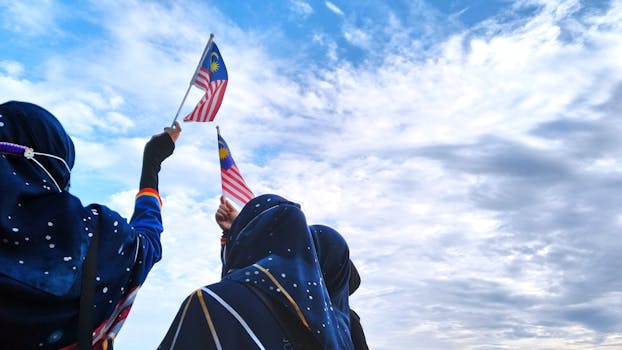
Malaysia, a land defined by its lush rainforests, gleaming skyscrapers, and shimmering coastlines, is also a living tapestry of diverse cultures, languages, and beliefs. While visitors may be dazzled by the country’s natural beauty or culinary delights, the true essence of Malaysia lies in the complex and often misunderstood interplay of its peoples and traditions. To truly appreciate the nation, one must look beyond the surface and delve into the subtleties that make Malaysian culture both unique and enigmatic. This article unpacks some of the lesser-known mysteries and nuances of Malaysia’s cultural identity, offering an exploration that goes beyond the obvious festivals and famous dishes.
The Roots of Malaysia’s Cultural Diversity
Malaysia’s cultural landscape is shaped by centuries of migration, trade, and colonial influence. The country’s three largest ethnic groups—Malays, Chinese, and Indians—make up about 69%, 23%, and 7% of the population respectively, according to the 2020 Malaysian census. Beyond these, there are dozens of indigenous communities, known collectively as the Orang Asli in Peninsular Malaysia and the Dayak, Kadazan-Dusun, Bajau, and more in East Malaysia (Sabah and Sarawak).
This diversity is not simply a matter of population numbers; it is deeply embedded in the everyday life, language, and customs of the nation. From the architecture of a kampung (village) house to the sounds of Tamil, Hokkien, and Iban spoken in bustling markets, Malaysia’s multiculturalism is lived rather than just celebrated.
.png)
A unique factor is the legacy of colonialism. Malaysia was ruled by the Portuguese, Dutch, and British, each leaving their mark—Portuguese-influenced Kristang communities in Malacca, Dutch architecture in the same city, and English as a key language of education and commerce.
Language: The Many Voices of Malaysia
Perhaps nowhere is Malaysia’s diversity more evident than in its linguistic landscape. While Bahasa Malaysia (Malay) is the official language, English is widely used in business, government, and education. But the real linguistic richness lies in the daily blend of languages and dialects.
A single conversation in a Malaysian city might effortlessly weave together Malay, English, Chinese dialects (like Cantonese, Hokkien, or Mandarin), Tamil, and even indigenous languages. This phenomenon, called code-switching, is not only common but also a point of pride.
For example, a common greeting among Malaysians is “lah,” an expressive particle added to sentences for emphasis or camaraderie: “Don’t worry lah!” This word has no direct translation but is instantly recognizable across all communities.
The role of language in identity is complex. While the government promotes Bahasa Malaysia as a unifying force, many Chinese Malaysians attend Chinese-medium schools, and Indian Malaysians often speak Tamil at home. In East Malaysia, indigenous languages like Iban and Kadazan are still vibrant.
Religion and Ritual: Harmony Amidst Diversity
Malaysia is a showcase of religious pluralism, with Islam as the official religion. About 63% of the population is Muslim (mainly ethnic Malays), while Buddhism, Christianity, Hinduism, Sikhism, and indigenous animist beliefs are widely practiced.
Mosques, temples, and churches often stand side by side in Malaysian towns. The country’s architecture mirrors this coexistence: the Sultan Salahuddin Abdul Aziz Mosque in Shah Alam (Malaysia’s largest) is a short drive from the 272-step Batu Caves Hindu temple, while Chinese temples and Christian churches dot the urban landscape.
Interfaith respect is woven into the nation’s fabric, though not without challenges. Major religious festivals are national holidays: Hari Raya Aidilfitri (Eid Al-Fitr), Chinese New Year, Deepavali (Diwali), and Christmas are all celebrated with open houses—where people of all backgrounds are welcomed into each other’s homes.
Yet, the nuances of religious practice are often missed by outsiders. For example, the concept of halal goes beyond food—it influences social etiquette, event planning, and even finance (such as Islamic banking). Similarly, ancestral veneration and feng shui play important roles in Chinese-Malaysian homes, while Indian Malaysians may observe rituals like Thaipusam, a visually striking festival involving body piercing and elaborate processions.
Customs, Etiquette, and the Malaysian Social Fabric
Malaysian social interactions are characterized by a blend of warmth, reserve, and subtle hierarchy, reflecting both traditional Asian values and the nation’s own unique adaptations.
Respect for elders and authority is paramount. Addressing someone with appropriate honorifics—such as “Dato’,” “Encik” (Mr.), “Puan” (Mrs.), or “Aunty/Uncle” even for non-relatives—is expected. Visiting a Malaysian home, guests typically remove their shoes at the door, and may be offered tea or snacks as a sign of hospitality.
One fascinating aspect is the concept of “face”—the importance of preserving harmony and avoiding public embarrassment. Malaysians often avoid direct confrontation, favoring indirect communication. A polite “can lah” or “maybe” may actually mean “no.” Understanding these subtleties is crucial for building meaningful relationships.
Gift-giving also follows cultural codes: Muslims may avoid alcohol or pork products, Chinese may favor gifts in pairs (as odd numbers are seen as unlucky), and Indians may appreciate gifts wrapped in bright colors but avoid black or white, which are associated with mourning.
Urban and Rural: Contrasts and Continuities
While Malaysia’s major cities like Kuala Lumpur and Penang are hubs of modernity, much of the country remains rural, with traditions and ways of life that predate independence in 1957.
The contrasts between urban and rural Malaysia highlight both divisions and connections. For example, in rural Kelantan (on the east coast), you’ll find traditional shadow puppet performances (wayang kulit) and batik artisans, while in urban Selangor, global brands and mega-malls dominate.
Yet, migration patterns blur these lines. Many urban Malaysians maintain strong ties to their “kampung” (village) roots, returning during holiday seasons for family gatherings. Rural-urban migration has also led to the blending of cuisines, dialects, and customs in new and unexpected ways.
To illustrate some of the key differences and similarities between urban and rural Malaysian life, see the comparison table below:
| Aspect | Urban Malaysia | Rural Malaysia |
|---|---|---|
| Language | Predominantly Malay & English, with various Chinese dialects | Malay, indigenous languages, local dialects |
| Lifestyle | Fast-paced, modern, tech-driven | Community-oriented, traditional, agricultural |
| Festivals | Large-scale, often commercialized | Intimate, tradition-focused |
| Housing | High-rise apartments, terrace houses | Wooden kampung houses, longhouses (in Borneo) |
| Daily Commute | Public transport, cars, motorcycles | Walking, bicycles, motorcycles |
Identity, Unity, and the Malaysian Paradox
Perhaps the greatest mystery of Malaysian culture lies in the paradox of unity and difference. The national motto, “Bersekutu Bertambah Mutu” (“Unity is Strength”), reflects an official commitment to harmony. Yet, the lived reality is more complex.
Government policies like the New Economic Policy (NEP), introduced in 1971, aimed to address economic imbalances between ethnic groups. While the NEP lifted millions out of poverty, it also entrenched certain divides. Today, debates about language, education, and representation continue to shape the national conversation.
At the same time, a growing generation of Malaysians identifies less by ethnicity and more by shared experiences—through music, sports, and pop culture. Social media campaigns like #KitaMalaysia (“We are Malaysia”) highlight the country’s ongoing journey toward a more inclusive identity.
Malaysia’s story is ultimately one of negotiation and adaptation, a balancing act between tradition and change, local and global, unity and diversity.
Final Reflections: Embracing Malaysia’s Cultural Complexity
To decode Malaysia is to embrace its contradictions and celebrate its intricacies. The nation’s culture is not a static set of customs, but a living, evolving mosaic shaped by history, geography, and the everyday choices of its people.
Whether you are visiting Malaysia or seeking to understand it from afar, look beyond the surface. Attend a wedding where multiple cultures blend seamlessly, listen to a conversation that slips between four languages, or join a neighborhood open house. Each experience offers a clue to the greater puzzle that is Malaysia.
In a world where cultural differences often divide, Malaysia stands as a testament to the possibility—and challenges—of coexistence. Its mysteries may never be fully unraveled, but the journey of discovery is what makes Malaysian culture so endlessly fascinating.