Ireland is a land wrapped in myth, history, and an evergreen beauty that captures the imagination of every traveler. From emerald hills to craggy coastlines, ancient castles to bustling cities, Ireland offers a unique blend of natural splendor and legendary storytelling. Whether you’re intrigued by the folklore of faeries and giants or drawn to its vibrant arts and music scene, discovering Ireland reveals a rich tapestry of experiences. Let’s embark on a journey through the legends, landscapes, and living culture that make Ireland a place like no other.
The Magic of Irish Mythology: Stories Woven into the Land
Ireland’s landscapes are not just visually stunning—they are steeped in stories passed down through generations. The country’s mythological heritage is among the oldest in Europe, with tales dating back over 2,000 years. The ancient Celts, who arrived around 500 BC, left a legacy of legends that still echo across hilltops and valleys.
One of the most famous legends is that of the Tuatha Dé Danann, a mystical race said to have ruled Ireland before being banished to the underworld, now thought to inhabit the country's many fairy forts and ring forts. The Giant’s Causeway, a natural wonder on the north coast with over 40,000 interlocking basalt columns, is said to be the handiwork of the giant Finn McCool, who built the causeway to challenge a Scottish rival.
.png)
This storytelling tradition is not just confined to ancient history. Modern Irish literature continues to draw from these deep wells of myth, with Nobel laureates like W.B. Yeats and Seamus Heaney weaving Ireland’s legends into world-renowned poetry and prose. In fact, Ireland has produced four Nobel Prize winners in literature, more per capita than any other country.
Lush Landscapes: From Emerald Fields to Rugged Coastlines
Ireland’s nickname, "The Emerald Isle," is well deserved. Over 17% of the country is covered in forest, and lush green fields blanket much of the land, thanks to the temperate Atlantic climate. But Ireland’s landscapes are far from monotonous. The island is home to a stunning variety of natural wonders, each with its own character and charm.
The Wild Atlantic Way, stretching 2,600 kilometers along the west coast, is one of the world’s longest defined coastal routes. Here, dramatic cliffs like the Cliffs of Moher rise 214 meters above the ocean, drawing over 1.5 million visitors annually. Inland, the Connemara National Park covers nearly 3,000 hectares of mountains, bogs, and woodlands, providing a haven for native wildlife such as red deer and the elusive pine marten.
Ireland’s lakes, or loughs, are another highlight. Lough Neagh is the largest lake in the British Isles, covering 151 square miles. Meanwhile, the mystical Lough Corrib is famed for its trout and salmon fishing, as well as its 365 islands—one for each day of the year, according to local lore.
Historic Castles and Ancient Monuments: Echoes of the Past
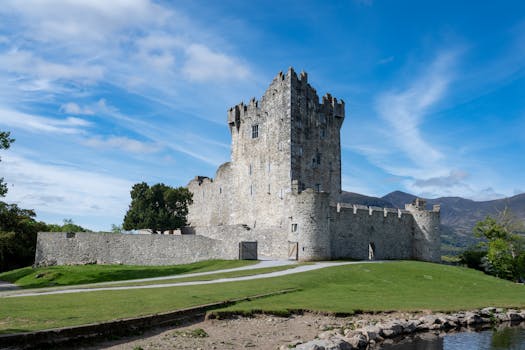
Ireland is dotted with over 30,000 castles and castle ruins, making it one of the densest concentrations in the world. These structures chart the island’s turbulent history, from Norman invasions to clan feuds and English colonization.
Blarney Castle, built nearly 600 years ago, is perhaps the most iconic. Each year, over 400,000 visitors climb its battlements to kiss the legendary Blarney Stone, said to bestow the "gift of the gab." Meanwhile, the Rock of Cashel, once the seat of the Kings of Munster, stands as a testament to Ireland’s ancient power and religious significance.
Ireland’s prehistoric monuments are equally awe-inspiring. Newgrange, a passage tomb built over 5,200 years ago—older than Stonehenge and the Egyptian pyramids—draws crowds each winter solstice. On that day, sunlight illuminates the inner chamber, demonstrating the advanced astronomical knowledge of its builders.
Modern Ireland: Vibrant Cities and Living Traditions
While Ireland’s legends and landscapes capture the imagination, its cities pulsate with contemporary energy. Dublin, the capital, is a UNESCO City of Literature and home to over 1.4 million people in its metropolitan area. The city boasts a thriving tech sector, with over 80% of global tech companies having operations in Ireland, earning it the nickname “Silicon Docks.”
Galway, on the west coast, is renowned for its arts festivals and was named the European Capital of Culture in 2020. Cork, Ireland’s second largest city, is famous for its culinary scene and lively markets, including the 230-year-old English Market.
Traditional music and dance remain at the heart of Irish identity. Sessions in local pubs feature fiddles, bodhráns, and uilleann pipes, while Irish stepdance—popularized by shows like Riverdance—continues to captivate audiences globally. The Irish language (Gaeilge), spoken by over 1.7 million people to some degree, is seeing a renaissance in schools and media.
Comparing Ireland’s Regions: Cultural and Landscape Diversity
Ireland may be a relatively small island at 84,421 square kilometers, but its regions offer striking contrasts in culture, history, and scenery. Here’s a comparative overview:
| Region | Main Cities | Key Attractions | Cultural Highlights | Annual Visitors (approx.) |
|---|---|---|---|---|
| Dublin & East | Dublin, Wicklow | Trinity College, Dublin Castle, Wicklow Mountains | Literary history, tech hub, vibrant nightlife | 5 million |
| South & Southwest | Cork, Killarney | Blarney Castle, Ring of Kerry, English Market | Food festivals, traditional music, scenic drives | 3 million |
| West & Connacht | Galway, Westport | Cliffs of Moher, Connemara, Aran Islands | Irish language, arts festivals, coastal beauty | 2.5 million |
| North & Northern Ireland | Belfast, Derry | Giant’s Causeway, Titanic Belfast, Antrim Coast | Industrial heritage, Game of Thrones sites, murals | 2 million |
These figures highlight not just the variety in attractions, but the distinct personalities found in each part of Ireland.
Wildlife and Natural Wonders: Ireland’s Untamed Side
Beyond its manicured gardens and historic estates, Ireland protects a diverse range of habitats, from peat bogs to coastal cliffs. The country is home to 450 species of birds and 35 species of mammals, including native red squirrels, Irish hares, and the famous Connemara pony.
The Skellig Islands, located 12 kilometers off the Kerry coast, are a UNESCO World Heritage Site. Skellig Michael, with its ancient monastic settlement, rose to global fame as a filming location for the Star Wars franchise. The islands are also a sanctuary for puffins and one of the world’s largest colonies of gannets.
Ireland’s national parks—six in total—cover over 65,000 hectares, offering visitors opportunities for hiking, birdwatching, and whale spotting. The Burren, a unique karst landscape in County Clare, supports over 70% of Ireland’s native plant species, including rare orchids and alpine flowers.
The Warmth of Irish Hospitality: A Welcoming Culture
Perhaps Ireland’s greatest treasure is its people. The country consistently ranks among the world’s friendliest destinations. In 2022, Dublin and Galway were named among the top 10 friendliest cities in the world by Condé Nast Traveler readers.
The Irish concept of "craic" (pronounced “crack”) captures the spirit of fun, conversation, and conviviality that permeates daily life. Whether sharing stories in a cozy pub or joining in a local festival, visitors often remark on the genuine warmth and humor they encounter.
The hospitality sector is a major part of Ireland’s economy, employing over 180,000 people and welcoming more than 11 million international visitors in 2019—a record year before the pandemic. The tradition of céad míle fáilte, meaning "a hundred thousand welcomes," is alive and well across the island.
Legends, Landscapes, and Lasting Impressions: Ireland’s Enduring Allure
Ireland’s reputation as a land of legends and lush landscapes is well earned. From ancient myths etched into every stone and stream, to the vibrant culture and natural wonders that await around every bend, Ireland offers an experience that is both timeless and ever-changing. Whether you seek adventure, relaxation, or a deeper connection to history and heritage, the Emerald Isle invites you to become part of its story—a journey you’ll never forget.