For centuries, the Japanese tea ceremony has captivated people worldwide with its graceful movements, reverence for nature, and deep-rooted symbolism. Far more than simply drinking tea, the traditional Japanese tea (chanoyu, chadō, or sadō) is a cultural practice that embodies Japan’s aesthetic values, philosophy, and social etiquette. Its rituals, evolving through history, offer a window into the heart of Japanese culture—where every gesture, utensil, and moment is imbued with meaning. In this article, we’ll trace the fascinating history of traditional Japanese tea, explore its artistry and rituals, and examine how these traditions continue to shape modern Japanese society.
The Origins and Evolution of Japanese Tea Culture
The origins of Japanese tea culture can be traced back to the early 9th century, when Buddhist monks such as Saichō and Kūkai brought tea seeds and the custom of tea drinking from China. Initially, tea was consumed mainly in religious contexts, as monks used it to aid meditation due to its stimulating properties. By the 12th century, the Zen Buddhist monk Eisai introduced powdered green tea (matcha) and the practice of whisking it, closely resembling what we now recognize in the Japanese tea ceremony.
The Kamakura (1185–1333) and Muromachi (1336–1573) periods marked significant development. Tea drinking spread among the warrior class (samurai) and aristocrats, becoming a symbol of status and luxury. By the 16th century, tea gatherings—cha-yoriai—became more formalized, evolving into “chanoyu,” which emphasized simplicity, humility, and spiritual harmony, influenced heavily by Zen principles.
.png)
Sen no Rikyū (1522–1591), the most influential tea master, established the aesthetic and spiritual foundations of the tea ceremony that persist today. He championed “wabi-sabi”—the beauty of imperfection and transience—by favoring rustic utensils, natural materials, and modest settings. His legacy endures in the various schools (iemoto) of tea, such as Urasenke, Omotesenke, and Mushakōjisenke, which continue to preserve and adapt these traditions.
The Artistry of Japanese Tea: Tools, Utensils, and Architecture
The Japanese tea ceremony is a multisensory art form where every object and space is thoughtfully selected to create harmony. The utensils—collectively called chadōgu—are not merely functional; they are works of art, often crafted by renowned artisans.
Key utensils include:
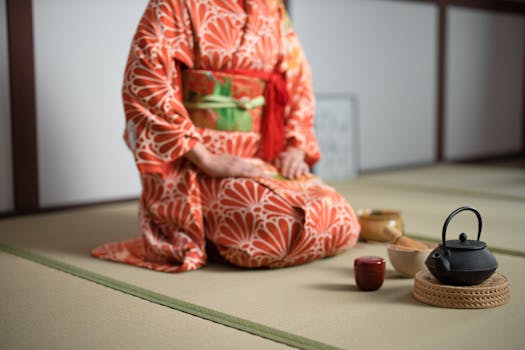
- Chawan (tea bowl): Central to the ceremony, each chawan is unique. Some are centuries old, and their imperfections are celebrated. - Chasen (bamboo whisk): Hand-carved from a single piece of bamboo, the chasen whisks matcha into a frothy, smooth beverage. - Chashaku (tea scoop): Used to measure and transfer powdered matcha, typically made from bamboo. - Natsume or Cha-ire: Containers for storing matcha, made from lacquered wood or ceramic.The tea room (chashitsu) itself is a masterpiece of minimalist architecture. Traditionally, it is a small, tatami-matted space, often detached from the main house and surrounded by a garden (roji). The entrance may require guests to stoop, symbolizing humility. The alcove (tokonoma) displays a seasonal scroll or flower arrangement, setting the tone for the gathering.
Rituals and Symbolism: The Heart of the Tea Ceremony
At the core of the Japanese tea tradition are its rituals—choreographed movements that reflect mindfulness, respect, purity, and tranquility. The most formal style, “chaji,” can last up to four hours and includes a kaiseki meal, multiple servings of thick (koicha) and thin tea (usucha), and intricate etiquette observed by both host and guests.
Every step—cleaning the utensils, preparing the tea, serving, and receiving—follows precise rules. Guests admire the utensils, express gratitude, and turn their bowls before drinking, symbolizing humility.
Four guiding principles, articulated by Sen no Rikyū, define the ceremony:
1. Wa (Harmony): Emphasizing peaceful relations among participants and with nature. 2. Kei (Respect): Demonstrated through gestures, bowing, and careful handling of utensils. 3. Sei (Purity): Reflected in the meticulous cleaning of objects and the spiritual cleansing of participants. 4. Jaku (Tranquility): The ultimate goal, achieved through the meditative, unhurried flow of the gathering.Seasonality is integral. Each ceremony is tailored to the time of year—utensil choices, flowers, and even the style of tea shift with the seasons, celebrating nature’s cycles.
Comparing Japanese Tea Ceremony with Other Global Tea Traditions
While tea is cherished globally, Japan’s approach is distinctive in its ritualized form and Zen influence. A comparison highlights these differences:
| Aspect | Japanese Tea Ceremony | Chinese Gongfu Tea | British Afternoon Tea |
|---|---|---|---|
| Tea Type | Powdered green tea (Matcha) | Loose-leaf teas (Oolong, Pu-erh, Green) | Black tea (Assam, Darjeeling, Earl Grey) |
| Key Utensils | Chawan, chasen, chashaku, natsume | Gaiwan or Yixing teapot, fairness pitcher, small cups | Teapot, strainer, milk jug, sugar bowl, cups and saucers |
| Setting | Chashitsu (tea room), tatami mats, garden | Tea table, informal or formal | Drawing room, parlor, or café |
| Philosophy | Zen, wabi-sabi, mindfulness | Harmony, balance, appreciation of flavor and aroma | Socialization, etiquette, indulgence |
| Duration | 30 mins to 4 hours (formal chaji) | 30 mins to 1 hour | 1 to 2 hours |
This table demonstrates how the Japanese tea ceremony stands apart, focusing on spiritual fulfillment and refined aesthetics rather than simply taste or socializing.
Tea Schools and the Transmission of Tradition
The preservation and teaching of Japanese tea traditions are entrusted to various schools, each tracing its lineage to Sen no Rikyū or his disciples. The three main schools—Urasenke, Omotesenke, and Mushakōjisenke—share core values but differ in subtle details such as whisking technique, tea bowl handling, or preferred utensils.
The iemoto system, a hierarchical structure, ensures the transmission of authentic practices from master to student. Today, there are more than 120 officially recognized tea schools throughout Japan, with Urasenke being the largest and most internationally active. These schools offer lessons to students of all ages, with some 3 million practitioners across Japan as of 2020.
Beyond formal schools, tea clubs (sadō circles) are popular in schools, universities, and communities, helping younger generations connect with this important cultural heritage.
The Contemporary Relevance of Traditional Japanese Tea
Despite modernization, the traditional Japanese tea ceremony remains vibrant. Annually, more than 50,000 tea ceremonies are held across Japan, from grand festivals like Kyoto’s Kitano Tenmangu Tea Ceremony (attracting over 10,000 visitors) to intimate home gatherings. Modern tea masters continue to innovate, hosting open-air or cross-cultural ceremonies and collaborating with artists and designers.
In a fast-paced society, the tea ceremony offers a rare opportunity for mindful reflection, fostering interpersonal respect and appreciation for the present moment. It is also a popular feature in Japanese tourism, with thousands of visitors every year experiencing tea ceremonies in Kyoto, Kanazawa, and Tokyo.
The health benefits of matcha—rich in antioxidants, L-theanine, and vitamins—have further fueled global interest. According to a 2023 report by Research and Markets, the Japanese matcha market is projected to grow at a CAGR of 7.6% between 2023 and 2028, underscoring its enduring appeal.
Reflections on the Enduring Legacy of Japanese Tea Rituals
The history and traditions of traditional Japanese tea are far more than an elegant pastime—they are a living art and a philosophy of life. From their Buddhist beginnings to the refined ritual perfected by Sen no Rikyū, the art and rituals of Japanese tea have shaped national identity and influenced aesthetics, etiquette, and even modern wellness trends. In every carefully whisked bowl of matcha, centuries of wisdom, humility, and harmony are distilled. As interest in mindfulness and slow living grows, the Japanese tea ceremony stands as a timeless lesson in the beauty of simplicity and the power of shared moments.