A Dive into Greek Mythology: The Stories That Shape a Culture
Greek mythology is much more than a collection of ancient tales; it is the tapestry that weaves together the history, values, and imagination of one of the world’s oldest civilizations. These stories, passed down for thousands of years, have influenced language, art, philosophy, and even modern psychology. From the thunderous might of Zeus to the cunning of Odysseus, Greek myths are rich in drama and meaning. But what gives these stories their enduring power? How have they shaped Greek culture and the broader world? This article explores the heart of Greek mythology, tracing its origins, key themes, lasting impact, and the timeless characters who continue to inspire us today.
The Origins of Greek Mythology: More Than Just Stories
Greek mythology is rooted in the oral traditions of Bronze Age Greece, dating back as far as 1600 BCE. These tales were not originally written down but shared through poetry, song, and storytelling. The two earliest and most influential written sources are Homer’s "Iliad" and "Odyssey" (circa 8th century BCE) and Hesiod’s "Theogony" and "Works and Days" (circa 700 BCE). These texts laid the foundations for the pantheon of gods and heroes, providing a shared mythic history for the Greek people.
The importance of these myths was more than entertainment. They explained natural phenomena, human behavior, and the origins of the world and humanity. For instance, the myth of Demeter and Persephone explained the changing seasons, while Prometheus’ theft of fire from the gods was a metaphor for human progress and suffering.
.png)
Archaeological discoveries, such as the frescoes at Knossos and the Linear B tablets, confirm that many mythic themes—sacred rituals, divine kings, and epic battles—were integral to early Greek culture. By 500 BCE, Greek mythology was embedded in religious practice, politics, and daily life, forming the backbone of Hellenic identity.
The Pantheon: Gods, Goddesses, and Divine Hierarchy
Central to Greek mythology is its pantheon—a complex hierarchy of gods and goddesses, each with distinct personalities, powers, and domains. The Olympian gods, who resided atop Mount Olympus, were led by Zeus, the king of the gods. His siblings, including Poseidon (god of the sea) and Hades (god of the underworld), and his children—such as Athena, Apollo, Artemis, and Hermes—each played vital roles in myth and worship.
The gods were not distant or infallible. Unlike many later religious traditions, the Greek gods were profoundly human in their emotions and flaws. They quarreled, fell in love, sought revenge, and even meddled in human affairs. This anthropomorphism made them relatable and allowed myths to explore universal human experiences.
Below is a comparison of some major Greek gods and their Roman counterparts, illustrating the reach of Greek myth beyond its own culture:
| Greek God | Domain | Roman Equivalent | Notable Myths |
|---|---|---|---|
| Zeus | Sky, thunder, king of gods | Jupiter | Birth of Athena, overthrow of Cronus |
| Hera | Marriage, family | Juno | Labors of Heracles |
| Poseidon | Sea, earthquakes | Neptune | Contest for Athens |
| Athena | Wisdom, warfare, craft | Minerva | Odysseus’ protector |
| Apollo | Sun, music, prophecy | Apollo | Oracle of Delphi |
| Artemis | Hunt, moon, wilderness | Diana | Niobe’s punishment |
| Hades | Underworld, the dead | Pluto | Abduction of Persephone |
This table shows not only the central figures but the way Greek mythology formed the basis for Roman myth, which in turn influenced Western literature, art, and even planetary names.
Heroes and Mortals: The Human Side of Myth
While the gods ruled the heavens, Greek mythology is equally famous for its mortal heroes—figures whose exploits bridged the divine and human worlds. These stories were more than adventure tales; they reflected Greek ideals of honor, intelligence, courage, and sometimes tragic fate.
The most famous hero is perhaps Heracles (Hercules in Roman myth), known for his Twelve Labors—a series of nearly impossible tasks set by King Eurystheus. Heracles’ story is one of perseverance, redemption, and the struggle against one’s own flaws.
Another celebrated figure is Odysseus, whose decade-long journey home from Troy is chronicled in the "Odyssey." Odysseus’ cunning, resourcefulness, and occasional hubris made him a model of the Greek virtue of "metis" (cleverness).
Other notable heroes include:
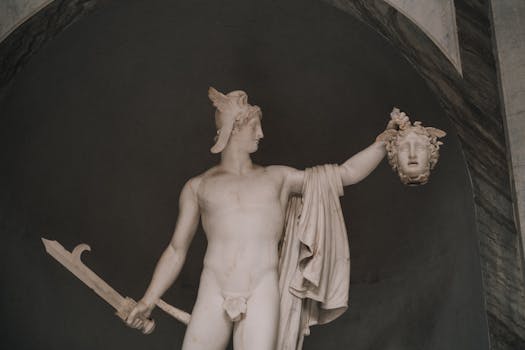
- Perseus, who slew the Gorgon Medusa - Theseus, who defeated the Minotaur in the labyrinth of Crete - Jason, leader of the Argonauts in search of the Golden Fleece - Achilles, the nearly invincible warrior of the "Iliad"These heroes were often aided or hindered by the gods, reflecting the Greek belief in "moira" (fate) and the idea that even the mightiest mortals could not escape destiny. The phrase “Achilles’ heel,” for example, comes from the legend that the hero’s only vulnerable spot was his heel—a metaphor for human vulnerability.
Mythology in Daily Life: Ritual, Art, and Language
Greek myths were not confined to stories told around the fire; they were a living part of everyday Greek life. Temples, festivals, and rituals were dedicated to the gods, each with its own mythic justification. The Olympic Games, first held in 776 BCE in honor of Zeus, are a prime example—an event whose mythic origins underscored athletic prowess and communal identity.
Mythology also permeated art and architecture. The Parthenon in Athens was dedicated to Athena, and its friezes depict legendary battles and divine scenes. Vase paintings, mosaics, and sculptures brought mythic episodes to life, serving both as decoration and as moral instruction.
Greek language and expression are saturated with references to myth. Words like "titanic" (from the Titans), "herculean" (from Heracles), and "narcissistic" (from Narcissus) are still used today. According to the Oxford English Dictionary, over 150 English words derive directly from Greek mythological characters or places.
Enduring Influence: Greek Mythology in the Modern World
Greek mythology’s influence extends far beyond the borders of ancient Greece. During the Renaissance, artists such as Botticelli and Michelangelo revived mythic themes in works like "The Birth of Venus" and "Leda and the Swan." The Enlightenment saw philosophers like Voltaire and Rousseau drawing on myth to explore human nature and society.
In the 20th and 21st centuries, Greek myths have inspired countless novels, films, and television series. Rick Riordan’s "Percy Jackson" books have sold over 69 million copies worldwide, introducing a new generation to the pantheon of gods and heroes. Hollywood adaptations such as "Clash of the Titans" and "Wonder Woman" draw directly on Greek mythic archetypes.
Psychology, too, owes a debt to Greek mythology. Freud’s concept of the "Oedipus complex" and Jung’s theory of archetypes both borrow from mythic narratives to explain universal patterns of human experience. According to a 2015 survey by the American Psychological Association, over 60% of introductory psychology textbooks reference Greek myths in some form.
Lessons from the Myths: Morals, Warnings, and Wisdom
Greek myths are not just entertaining—they are profoundly moral and philosophical. Many stories warn against hubris (pride), as with Icarus, who flew too close to the sun, or King Midas, whose greed turned his daughter to gold. Other myths explore the tension between fate and free will, the power of love, or the inevitability of death.
The myth of Pandora, for example, explains the origin of human suffering but also the enduring presence of hope. The story of Orpheus and Eurydice explores the limits of love and the consequences of doubt. These themes remain relevant today, speaking to the shared struggles and aspirations of humanity.
Conclusion: The Living Legacy of Greek Mythology
Greek mythology is more than a relic of the past; it is a living tradition that continues to shape literature, art, psychology, and everyday language. The stories of gods and mortals, of triumph and tragedy, provide a mirror for human experience and a wellspring of imagination. As long as people tell stories, the legacy of Greek mythology will endure—inviting each generation to explore its depths and discover its truths anew.